Every homeowner eventually faces the same question: grab a can of spray from the hardware store, or call in a professional? This pest control comparison breaks down the real differences in cost, effectiveness, and safety between DIY pest control and professional pest control, so you can make the right call before a small problem becomes a big one.
What Is DIY Pest Control?
DIY pest control means handling infestations yourself using store-bought sprays, baits, traps, or natural remedies. It’s the go-to first step for most homeowners because it’s cheap, immediate, and doesn’t require scheduling anyone.
Common DIY tools include:
- Aerosol insecticide sprays
- Sticky traps and bait stations
- Boric acid, diatomaceous earth, and other natural treatments
- Caulk and sealant for entry points
What Is Professional Pest Control?
Professional pest control involves licensed technicians who inspect your property, identify the exact pest and its source, and apply commercial-grade treatments that aren’t available to consumers. Most services also include follow-up visits and a guarantee.
A typical professional visit includes:
- A full property inspection (interior and exterior)
- Species identification and nest/colony location
- Targeted treatment using professional-strength products
- A treatment plan and warranty for re-treatment if pests return
DIY vs Professional Pest Control: Key Differences
| Factor | DIY Pest Control | Professional Pest Control |
|---|---|---|
| Upfront cost | Low ($10–$50 per product) | Higher ($150–$500+ per visit) |
| Long-term cost | Adds up with repeat purchases | Often bundled into a maintenance plan |
| Effectiveness | Treats visible pests | Treats the source: nests, colonies, entry points |
| Products used | Consumer-grade, limited strength | Commercial-grade, professional-only formulas |
| Time investment | Ongoing effort, repeated applications | Usually resolved in one visit |
| Safety | Risk of misuse or overexposure | Applied per safety regulations by trained techs |
| Guarantee | None | Warranty or free re-treatment |
| Best for | Ants, minor spiders, isolated bugs | Termites, rodents, bed bugs, recurring infestations |
Cost Comparison: Cheaper Upfront Doesn’t Mean Cheaper Overall
DIY pest control wins on sticker price. A bottle of spray costs far less than a professional visit. But that math only holds if the DIY treatment actually works the first time.
Repeated purchases after failed treatments, plus the cost of property damage from pests DIY methods miss — termites being the clearest example — can quickly outpace what a professional would have charged upfront.
Effectiveness: Treating Symptoms vs. Solving the Problem
This is where the two approaches diverge most. DIY pest control kills what you can see. Professional pest control finds and treats what you can’t — the nest behind the wall, the colony under the slab, the entry point in the foundation.
That’s why pests treated with DIY products often reappear within weeks: the individual bugs are gone, but the source isn’t.
Safety Considerations
Store-bought pesticides are legal for consumer use, but misuse is a real risk — overapplication, mixing chemicals, or using them near children and pets without proper precautions.
Professional pest control technicians are trained in EPA-compliant application, use the correct concentration for the pest and space, and know how to keep treatments safe around households.
When DIY Pest Control Makes Sense
DIY pest control is a reasonable choice when:
- You’re dealing with a small, isolated ant trail
- You’ve spotted one or two spiders, not an ongoing pattern
- You’re being preventive — sealing cracks, cleaning up food sources
- There’s no sign of nesting, damage, or a recurring pattern
When You Should Call a Professional
Skip the DIY route and call a professional if you notice:
- Termites or any sign of wood damage
- Bed bugs
- Rodents (mice or rats)
- The same pest coming back despite DIY treatment
- A wasp or hornet nest
- Pest activity in a home with infants, pets, or elderly residents
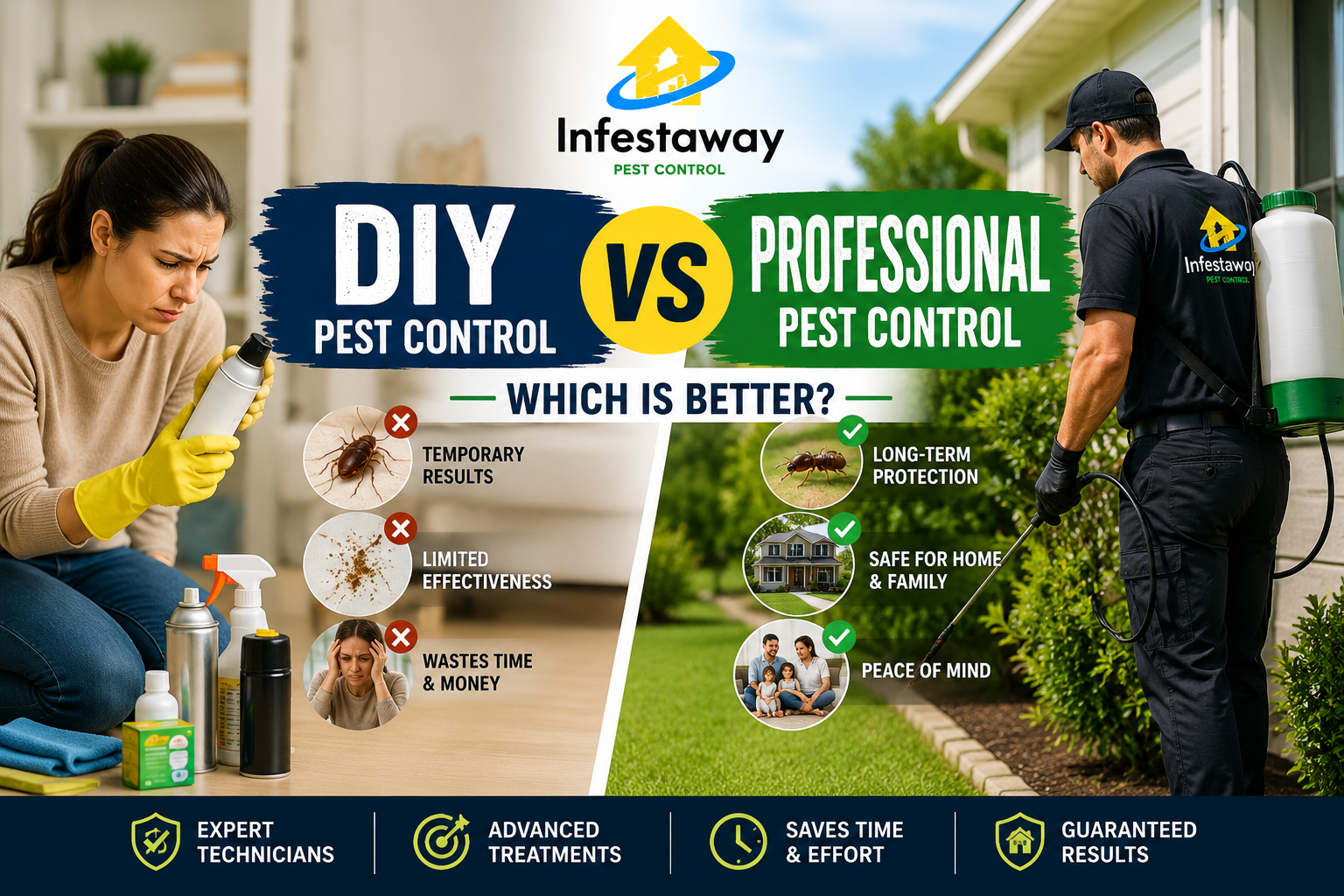
Verdict: Which Is Better?
For small, isolated issues, DIY pest control is a fine first step. But for anything recurring, structural, or health-related — termites, rodents, bed bugs — professional pest control is the better choice because it treats the source of the infestation, not just the pests you can see.
How Often Should You Get Professional Pest Control?
Most homes benefit from quarterly professional treatments, with more frequent visits recommended in high-pest-pressure regions or after a confirmed infestation.
Get a Free Inspection from InfestAway Pest Control
Not sure which category your pest problem falls into? InfestAway Pest Control offers free inspections to identify exactly what you’re dealing with and whether DIY methods will actually work — or if it’s time for professional treatment.
Call InfestAway Pest Control at +1 (903) 388-7516 to schedule your free inspection.
Frequently Asked Questions (FAQs):
Is DIY pest control effective for a serious infestation?
No. DIY treatments typically only kill visible pests and don’t reach hidden nests, termite colonies, or large-scale infestations, so a professional inspection is recommended for serious problems.
How much does professional pest control typically cost?
Cost varies by pest type and property size, but most treatments range from $150–$500 depending on severity and whether it’s a one-time visit or an ongoing plan.
Are DIY pest control products safe for pets and children?
Not always. Store-bought pesticides can pose risks if misapplied, while professional technicians apply treatments according to safety guidelines that account for pets and children in the home.
Can I combine DIY and professional pest control?
Yes. Many homeowners use DIY prevention, like sealing cracks and removing food sources, alongside professional treatment for existing infestations for the best long-term results.
How do I know if I need a professional instead of DIY?
Signs that call for a professional include termites, bed bugs, rodents, pest activity that returns despite DIY treatment, or a nest near an entry point to the home.
Does InfestAway Pest Control offer free inspections?
Yes. Call InfestAway Pest Control at +1 (903) 388-7516 to schedule a free inspection and get a clear read on whether DIY or professional treatment fits your situation.